In one word, what sets MD Ally apart?
Impact.
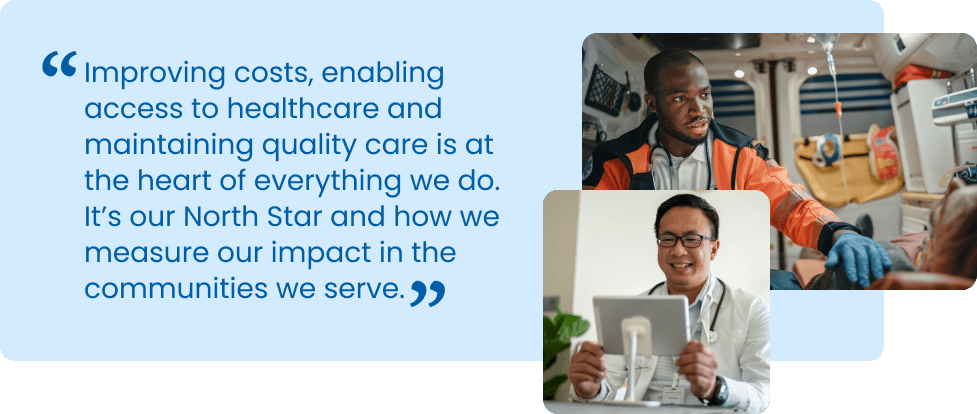
We sit at an intersection that positively impacts multiple stakeholders from public safety to payers to the patient. We help all parties better navigate and access the best care option based on their needs and capacity.
For example, from the patient standpoint, navigating healthcare can be extremely challenging. As a child, 911 is often the first number you learn. We see patients use this resource as a last resort when they’ve exhausted other avenues. Maybe they have tried to set up appointments with primary care physicians or specialists but for one reason or another, this pathway to health was cut short, and they resort to calling 911 for concerns that would not fall under your typical medical emergency. Our team steps in to help manage 911 traffic, separating emergency and nonemergency issues while still providing access to appropriate care — whether that be a trained medical professional or emergency medical services.
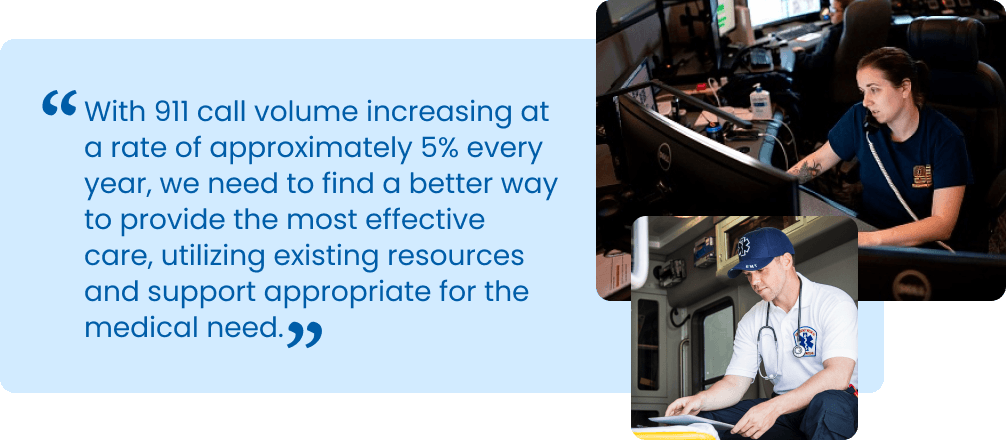
In terms of public safety, the problem we’re solving is related to response time. From 911 operators to paramedics and first responders, all roles are limited in capacity. Staffing shortages and budget cuts translate into longer response times, and since resources are usually deployed on a first-come, first-served basis, someone with a mild ailment, let’s say toe pain, may be in the ambulance queue before an individual experiencing heart attack symptoms.
And finally, on the payer side of the equation, although there may be several resources at the patient’s fingertips — a user-friendly app, 24/7 patient telehealth line, preventive care services — there will still be a large percentage of their member base that reverts to what they know and uses the 911 system. Instead of trying to change patient behavior, why not embrace it, meet the patients where they are and drive them toward the best outcome and patient experience from there.